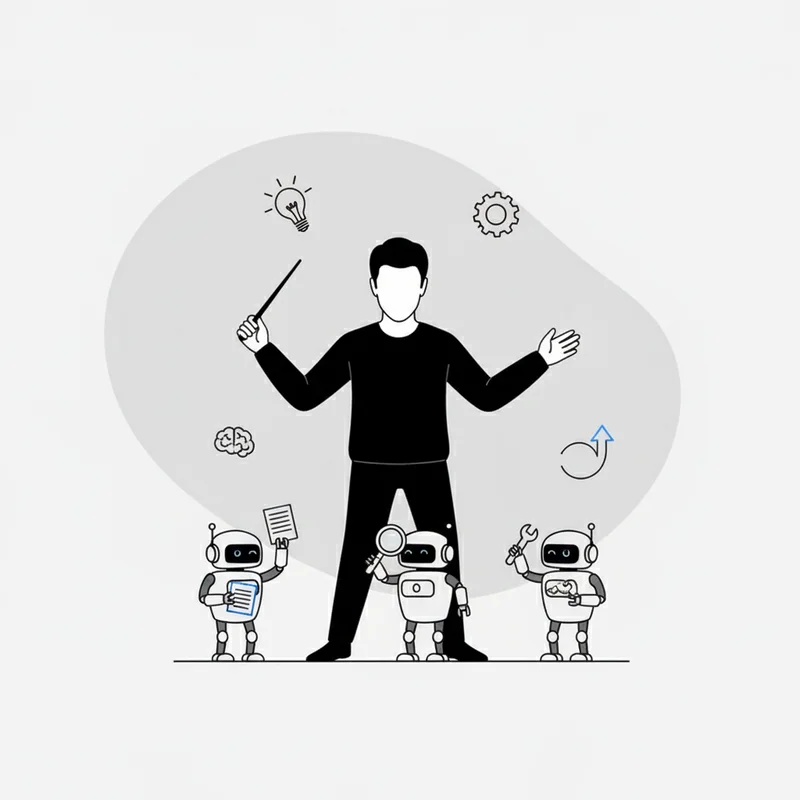
Key Takeaways: Personal AI Assistant for CEO
A personal AI assistant for CEO is a sophisticated software solution designed to automate routine, analytical, and communicative tasks, significantly freeing up a leader's time. By integrating with core business systems, it learns preferences and provides data-driven insights, enabling CEOs to focus on strategic growth and critical decision-making.
- Save up to 12 hours weekly by automating mundane tasks.
- Gain deeper insights from consolidated data across CRM, finance, and HR systems.
- Boost productivity with AI-driven report generation and meeting preparation.
- Delegate routine communications and information retrieval to an intelligent agent.
- Focus on high-level strategy and innovation, rather than operational minutiae.
Why a Personal AI Assistant for CEO is No Longer a Luxury
In today's fast-paced business environment, a CEO's time is their most valuable asset. The sheer volume of information, meetings, and operational tasks can quickly overwhelm even the most efficient leader, diverting attention from strategic initiatives. This is where a `personal ai assistant` steps in, offering a transformative solution to reclaim precious hours and amplify focus. As Illia Hryhor often emphasizes, the goal of automation is not just efficiency, but enabling leaders to perform at their highest strategic level.
Recent trends underscore the growing impact of AI in leadership roles. A compelling case study recently highlighted how a dedicated `personal ai assistant` helped a business owner save a remarkable 12 hours of work time per week, proving that significant `business time saving` is not only possible but achievable now. This is a game-changer for any leader looking to optimize their workflow and enhance their strategic output.
What is a Personal AI Assistant for CEO and How Does It Work?
A `personal ai assistant` for CEO is an advanced AI agent specifically trained to understand and execute tasks based on a leader's unique operational context and preferences. Unlike generic chatbots, this specialized assistant integrates deeply with a company’s various data sources and systems. It acts as an extension of the CEO, learning from past interactions and proactively delivering relevant information or completing tasks.
The core functionality involves connecting to systems like CRM, financial databases, project management tools such as Jira, HR systems, corporate email, and cloud storage like Google Drive. The `personal ai helper` then indexes this vast information, learning reporting formats, key metrics, and even the optimal times for specific queries. This allows it to offer ready-made solutions, analytics, and summaries, truly enabling effective `ceo task automation`.
"The true power of a personal AI assistant lies in its ability to not just process information, but to synthesize it into actionable intelligence, tailored to the unique needs and decision-making style of a CEO." — Illia Hryhor, Business Process Automation Specialist.
Unlocking 12 Hours Weekly: The Power of AI Assistant for CEO
The widely discussed case study of a business owner saving 12 hours per week with a `personal ai assistant` provides a clear roadmap for other leaders. This individual's AI agent seamlessly integrated across all company systems, creating a unified intelligence layer. It indexed vast amounts of data, from sales figures in the CRM to project statuses in Jira, learning the specific reporting needs of the CEO.
This intelligent integration allowed the `ai assistant for ceo` to autonomously generate performance reports, summarize critical emails, and even draft responses, all while adhering to the CEO's preferred style and metrics. Instead of spending hours compiling data or sifting through communications, the CEO received concise, actionable insights, enabling faster and more informed decisions. This real-world example vividly demonstrates how significant `business time saving` can be achieved through targeted AI deployment.
Beyond Basic Automation: Advanced CEO Task Automation
While managing calendars and emails is a starting point, modern `ceo task automation` extends far beyond these foundational elements. A sophisticated `personal ai helper` can perform complex data analysis, identify trends across departments, and even flag potential risks or opportunities from disparate data sets. For instance, it can cross-reference market data with internal sales figures to project future growth or pinpoint inefficiencies.
With recent advancements, such as OpenAI's updates to ChatGPT, including GPT-5.1 and GPT-5.4 mini, the capabilities of these assistants are rapidly expanding. Improved file handling, now supporting up to 20 files simultaneously and a wider range of types, means an `ai assistant for ceo` can more efficiently process large documents, contracts, and presentations, turning raw data into strategic insights. This enhancement significantly boosts the assistant's ability to facilitate `boost productivity with ai` at the highest levels.
How to Boost Productivity with AI for Leaders
To truly `boost productivity with ai`, leaders must shift their perspective from simply automating tasks to leveraging AI for enhanced decision-making and strategic focus. A `personal ai assistant` can take on the heavy lifting of information gathering and initial analysis, leaving the CEO free to concentrate on interpretation, negotiation, and long-term vision. This reorientation of effort is critical for maximizing leadership impact.
Consider the time spent preparing for board meetings, analyzing financial statements, or synthesizing market research. An `ai assistant for ceo` can compile these reports, highlight key takeaways, and even simulate different scenarios based on historical data. This allows the CEO to arrive at discussions fully prepared, with a deep understanding of the underlying data, ultimately leading to more effective leadership and `automation for leaders`. The impact on efficiency is profound, as illustrated by the shift in workforce demands and the emergence of new KPIs in companies like Meta, focusing on AI token usage to measure employee effectiveness.
AI for Business: How to Boost Productivity and Save CostsImplementing Your Personal AI Helper: A Strategic Approach
Implementing a `personal ai helper` requires a strategic, phased approach, often guided by experts like Illia Hryhor. It begins with identifying the most time-consuming and repetitive tasks that a CEO faces daily. Next, it involves selecting or developing an AI solution that can integrate with existing business systems, ensuring seamless data flow and security. This often means leveraging custom LLMs or specialized AI agents.
The process includes training the AI with specific data sets, preferences, and decision-making frameworks unique to the CEO and the organization. This iterative learning ensures the `personal ai assistant` becomes increasingly effective over time. Illia Hryhor's expertise in `AI Agent Integration: Implementation and Business Automation` ensures that these solutions are not just technically sound but also strategically aligned with business goals.
Choosing the Right AI for Small Business Leaders
For `ai for small business` leaders, the choice of a `personal ai assistant` needs to balance capability with cost-effectiveness and ease of implementation. While large enterprises might invest in bespoke, highly integrated solutions, small businesses can start with more accessible AI tools that offer significant returns. The key is to identify core pain points that AI can alleviate, such as customer support, marketing content generation, or basic financial reporting.
Platforms like enhanced versions of ChatGPT (as per OpenAI's recent updates) or specialized AI tools integrated with existing SaaS solutions can serve as powerful starting points. The focus should be on practical `business time saving` and immediate productivity gains. Gartner's advice to CFOs to view AI investments as a portfolio of different bets, rather than a single ROI problem, is particularly relevant here, encouraging a diversified approach to AI adoption for small businesses.
The Evolving Landscape: AI for Business Leaders
The landscape of AI for business leaders is dynamic and rapidly evolving. Companies like Meta are actively expanding their AI tools, with Mark Zuckerberg himself developing a `personal ai assistant` for internal management optimization. This push by tech giants signifies a broader trend towards highly personalized and powerful AI support at the executive level. The implications for `automation for leaders` are immense, promising even more sophisticated capabilities in the near future.
Furthermore, the integration of AI is transforming traditional business models, particularly within SaaS. As companies increasingly build internal AI solutions, and SaaS pricing shifts from per-seat subscriptions to usage or outcome-based models, the value proposition of a `personal ai assistant` becomes even more compelling. This shift means leaders can expect more tailored and cost-effective AI solutions designed to deliver tangible results and `boost productivity with ai`. You can read more about this trend in New SaaS Pricing Models: Pay for Value, Not Seats.
Data Security and AI Governance for Your Personal AI Helper
While the benefits of a `personal ai assistant` are clear, data security and robust AI governance are paramount. Integrating an AI assistant into core business systems means granting it access to sensitive information. Therefore, selecting AI solutions with strong encryption, access controls, and compliance features is non-negotiable. Illia Hryhor consistently advises on the critical importance of secure integration.
Establishing clear guidelines for AI usage, data handling, and decision-making autonomy is crucial. This ensures that the `ai assistant for ceo` operates within defined ethical and security boundaries, protecting proprietary information and maintaining regulatory compliance. Understanding `AI Governance in SaaS: Risks, Security, and Compliance` is vital for any organization leveraging these powerful tools.
SaaS Security: How to Avoid Attacks and Protect Business DataFuture of CEO Task Automation: Agentic AI and Beyond
The future of `ceo task automation` is moving towards even more autonomous and proactive AI agents. These "agentic AI" systems are capable of not just executing instructions but also setting their own goals, planning multi-step actions, and even learning from failures. This level of sophistication will further enhance the capabilities of a `personal ai assistant`, allowing it to handle increasingly complex strategic tasks with minimal human intervention.
As AI ecosystems become more integrated, a `personal ai helper` will seamlessly orchestrate workflows across various applications, making decisions and adapting to new information in real-time. This evolution promises even greater `business time saving` and an unprecedented ability to `boost productivity with ai` for leaders across all sectors. Exploring Hyperautomation for Business: Agentic AI for Company Growth offers deeper insights into this transformative potential.
Frequently Asked Questions
What is a personal AI assistant?
A personal AI assistant is an artificial intelligence-powered software designed to perform tasks, provide information, and offer support tailored to an individual user's needs and preferences. For a CEO, this means an AI specifically configured to automate executive-level tasks, analyze business data, and assist in strategic decision-making.
How much time can a personal AI assistant for CEO save?
Based on recent case studies, a personal AI assistant for CEO can save a business owner up to 12 hours weekly. This significant `business time saving` is achieved by automating routine tasks like email management, report generation, data analysis, and information synthesis, allowing the CEO to focus on high-value strategic work.
How do I implement an AI assistant for CEO task automation?
Implementing an AI assistant for CEO task automation typically involves several steps: identifying key pain points, integrating the AI with existing business systems (CRM, ERP, email), training the AI on specific data and preferences, and continuously refining its performance. Partnering with an automation specialist like Illia Hryhor can streamline this complex process.
What kind of tasks can a personal AI helper automate for a leader?
A personal AI helper can automate a wide range of tasks for a leader, including summarizing emails and documents, generating performance reports, analyzing market trends, preparing meeting agendas and briefs, managing schedules, and even drafting routine communications. Its capabilities extend to complex data correlation and strategic insights, significantly enhancing `boost productivity with ai`.
Is a personal AI assistant suitable for small businesses?
Yes, a personal AI assistant is highly suitable for small businesses. While large enterprises might invest in custom solutions, `ai for small business` can leverage more accessible AI tools to achieve substantial `business time saving` and `boost productivity with ai`. The key is to focus on automating the most time-consuming tasks to maximize ROI.
What are the security considerations for using a personal AI assistant?
Security is a critical consideration for any `personal ai assistant`. It's essential to ensure the AI solution has robust data encryption, strict access controls, and adheres to relevant data privacy regulations. Implementing strong AI governance policies and choosing reputable AI providers are crucial steps to protect sensitive business information.
Optimize Your Leadership, Boost Your Impact
The era of the overwhelmed CEO is coming to an end. With a `personal ai assistant`, leaders can dramatically enhance their efficiency, reclaim valuable time, and sharpen their strategic focus. The proven ability to save up to 12 hours weekly is not just a productivity hack; it's a fundamental shift in how executive leadership can operate, enabling deeper insights and more impactful decisions. Illia Hryhor's expertise in `automation for leaders` can guide you in integrating these transformative tools into your business. Stop managing the mundane and start leading the future.
Ready to explore how a `personal ai assistant` can revolutionize your workday and deliver significant `business time saving`? Get in touch with Illia Hryhor today to discuss tailored AI solutions for your leadership needs.