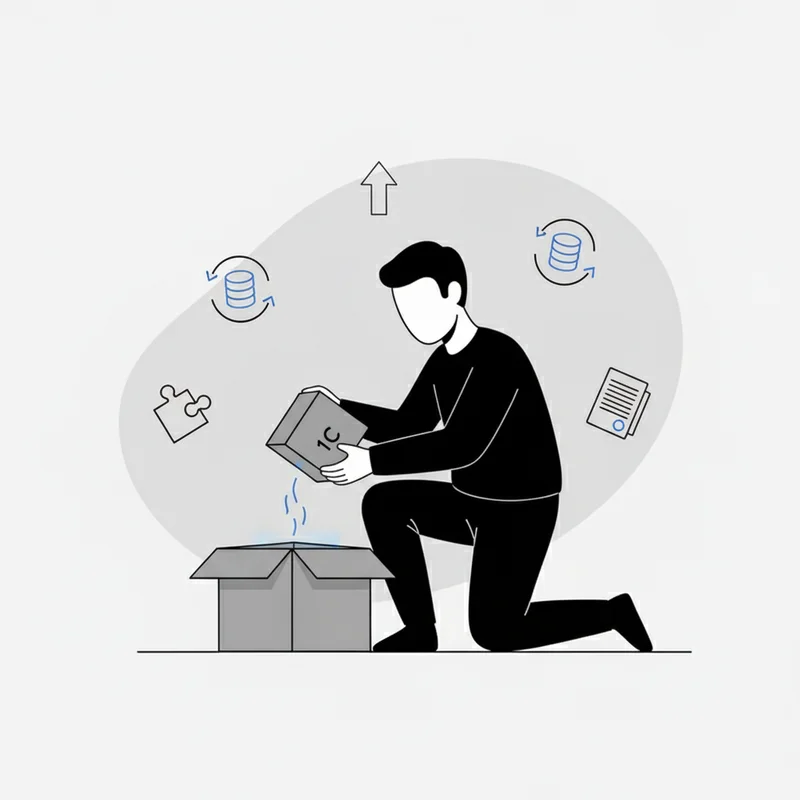
Key Takeaways: Navigating the 1C Ban and Transition to Ukrainian Software
The 1C ban in Ukraine, solidified by official government actions, mandates a critical shift for businesses away from Russian-origin software due to national security risks. This transition from 1C to Ukrainian software is not merely a compliance issue but an opportunity to modernize operations, enhance data security, and embrace robust Ukrainian ERP systems.
- The Ukrainian government officially banned 1C/BAS for state and critical infrastructure in January 2026, with broader implications for all businesses.
- Businesses must prioritize 1C data migration to secure and compatible platforms like MASTER:Bukhgalteriia.
- Ukrainian alternatives offer enhanced security, localized support, and integration with national services.
- Programs like GIZ's ERP vouchers support small and medium businesses in their transition.
- Expert assistance in service integration, like that provided by Illia Hryhor, is crucial for a smooth and efficient 1C replacement Ukraine.
What is the 1C Ban in Ukraine and Why is it Critical?
The 1C ban in Ukraine refers to the official prohibition of Russian-origin software, including 1C and BAS products, for state-owned enterprises and critical infrastructure, due to significant national security risks. This measure, formalized by the State Service of Special Communications and Information Protection of Ukraine (Dershzspetszviazok) on January 6, 2026, underscores the urgent need for a complete 1C replacement Ukraine-wide.
While direct penalties for private businesses using 1C are not yet universally implemented, the risks extend beyond legal compliance. Companies face potential data leaks, unauthorized system interference, and severe reputational damage, especially when dealing with state bodies or international partners. This makes the transition from 1C to Ukrainian software an imperative for all businesses.
"The 1C ban is a critical step towards digital sovereignty and national security. Businesses must view this not as a burden, but as an opportunity to fortify their digital infrastructure and align with national interests." - Interfax-Ukraine, March 2026
The government's stance, reinforced by proposed legislation like Bill №13505 aiming for a full phase-out of hostile software by 2030, clearly indicates a long-term commitment to eliminating Russian software from the Ukrainian market. This trend makes finding a reliable 1C alternative for business a strategic priority.
Why is 1C Replacement Ukraine-Wide a Strategic Imperative?
1C replacement Ukraine-wide is a strategic imperative because continued reliance on Russian-origin software poses significant cybersecurity, reputational, and operational risks. Beyond the official ban for state entities, private businesses face vulnerabilities such as potential backdoors for data exfiltration and foreign intelligence access, which can compromise sensitive financial and operational information.
Furthermore, the market for 1C specialists is dwindling, with younger professionals opting against training or career development in this platform. This scarcity will lead to increased costs for support and maintenance, higher risks of system failures, and reduced agility for businesses still using the software. A proactive transition from 1C to Ukrainian software safeguards business continuity and future growth.
Illia Hryhor emphasizes that integrating modern Ukrainian ERP systems is not just about compliance, but about leveraging advanced features for greater efficiency and security. This move allows companies to embrace solutions tailored to Ukrainian legislation and business practices, ensuring smoother operations and reducing administrative overhead.
How to Prepare for Effective 1C Data Migration?
Effective 1C data migration begins with thorough preparation, including a comprehensive audit of existing data and a meticulous cleanup of directories and records. Businesses should start by identifying all critical data points, such as financial records, inventory, customer databases, and HR information, that need to be transferred to the new system.
The next crucial step involves exporting this data into standard, universally compatible formats like CSV, XML, or SQL dumps. This standardization simplifies the import process into your chosen 1C alternative for business, minimizing potential errors and data loss. Illia Hryhor regularly advises clients on these initial preparatory steps, which are fundamental for a seamless transition.
- Data Audit: Identify all necessary data for migration (financials, inventory, HR, CRM).
- Data Cleansing: Remove duplicates, obsolete records, and correct inconsistencies.
- Standardization: Export data into universal formats (CSV, XML, SQL).
- Mapping: Understand how old data fields correspond to new system fields.
- Backup: Create multiple backups of your 1C database before any migration attempts.
For more detailed insights into this process, consider reading our article on 1C Data Migration: How to Integrate ERP Without Loss. Proper preparation is the cornerstone of successful 1C data migration, ensuring that your business maintains historical data integrity while moving to a new platform.
What are the Best 1C Alternative for Business in Ukraine?
The best 1C alternative for business in Ukraine are robust Ukrainian ERP systems and international solutions with strong localizations, offering enhanced security and compliance. After the 1C ban Ukraine, the market has seen a surge in demand for platforms like MASTER:Bukhgalteriia, a leading Ukrainian accounting solution known for its comprehensive features and adaptability to local regulations.
Other notable Ukrainian solutions include the Master suite from IT-Enterprise, Dilovod, SMARTFIN.UA, UGLA, SBE, BOOKKEEPER, iFin, Дебет Плюс, Універсал 7, and QUINCEFIN. For larger enterprises, international systems such as Creatio, Odoo, and SAP Business One (with Ukrainian localization) provide scalable and integrated modules for various business functions, from finance and logistics to HR and analytics.
"Over 60,000 users have replaced 'toxic software' with the Master line from Ukrainian IT-company IT-Enterprise, representing more than 1,000 companies, as of March 3, 2026." - IT-Enterprise, March 2026
Choosing the right 1C alternative for business depends on specific needs, size, and industry. Illia Hryhor helps companies navigate this selection process, ensuring the chosen system aligns with strategic goals and supports future automation initiatives. This strategic choice is crucial for a successful transition from 1C to Ukrainian software.
What is the MASTER:Bukhgalteriia Integration Process?
The MASTER:Bukhgalteriia integration process involves migrating financial and accounting data from legacy systems, primarily 1C, to this modern Ukrainian accounting solution. It typically begins with an analysis of the existing 1C database structure and the mapping of data fields to MASTER:Bukhgalteriia's architecture, ensuring all financial records, ledgers, and reporting structures are accurately transferred.
A key aspect of successful MASTER:Bukhgalteriia integration is the careful handling of historical data, including balances, transactions, and tax records, which are vital for continuity and compliance. Illia Hryhor's expertise in service integration facilitates this complex transfer, often utilizing API connectors or custom scripts to automate data import and minimize manual entry errors.
The process also includes configuring MASTER:Bukhgalteriia to match specific business processes, setting up user roles and permissions, and integrating with other essential business applications such as CRM, payroll, and banking systems. This comprehensive approach ensures that MASTER:Bukhgalteriia becomes a central, efficient, and secure component of the company's financial operations, making it a prime example of effective 1C replacement Ukraine.
How to Ensure a Smooth Transition from 1C to Ukrainian Software?
Ensuring a smooth transition from 1C to Ukrainian software requires meticulous planning, phased implementation, and comprehensive user training. Beyond the technical aspects of 1C data migration, it's crucial to manage the human element by providing clear communication, support, and education to all employees affected by the change.
Pilot projects with a small group of users can help identify and resolve issues before a full rollout. Regular testing of the new system, including data accuracy, reporting functionalities, and integrations, is paramount. Illia Hryhor advocates for a structured approach, breaking down the transition into manageable stages to minimize disruption to daily operations.
- Phased Rollout: Implement the new system department by department or module by module.
- Comprehensive Training: Provide hands-on training and clear documentation for all users.
- Dedicated Support: Establish a temporary support team to address user queries and issues post-migration.
- Feedback Loop: Collect feedback from users to identify areas for optimization and further training.
- Parallel Run: Consider running both 1C and the new Ukrainian software concurrently for a short period to verify data and processes.
This systematic approach, coupled with expert service integration, makes the transition from 1C to Ukrainian software efficient and less stressful for the entire organization. For businesses looking into broader SaaS strategy, our article on SaaS Strategy: How to Choose Profitable Solutions for Business offers valuable insights.
What are the Benefits of Ukrainian ERP Systems?
Ukrainian ERP systems offer numerous benefits, including enhanced data security, full compliance with national legislation, and localized support, making them superior to Russian-origin software. These systems are developed with Ukrainian business nuances in mind, ensuring seamless integration with local tax reporting, banking, and regulatory frameworks, unlike foreign solutions that might require extensive customization.
The commitment to national security is paramount, as Ukrainian software developers adhere to strict data protection standards, significantly reducing the risk of unauthorized access or data breaches. This is a critical advantage following the 1C ban Ukraine, as businesses seek to safeguard their sensitive information.
Furthermore, Ukrainian ERP systems provide accessible and responsive local customer support, often in Ukrainian, which simplifies troubleshooting and ensures quicker resolution of issues. This localized expertise is invaluable for businesses navigating complex regulatory environments. The shift to Ukrainian ERP systems is a strategic move that not only replaces 1C but also elevates operational efficiency and resilience.
Can Businesses Get Support for 1C Replacement in Ukraine?
Yes, businesses can get significant support for 1C replacement in Ukraine through various governmental, international, and private initiatives. For instance, the German federal company GIZ, in partnership with the Association IT Ukraine, launched the "ERP-Vouchers for MSMEs" program on February 12, 2026. This program offers financial assistance to micro and small businesses looking to transition from hostile software like 1C/BAS to quality alternatives.
Beyond financial aid, expert consultants like Illia Hryhor provide specialized service integration and automation services to guide companies through the entire 1C data migration and implementation process. This includes selecting the most suitable 1C alternative for business, customizing it to specific needs, and ensuring all data is securely transferred.
The growing ecosystem of Ukrainian ERP systems also means a robust network of developers and integrators ready to assist. This collective effort ensures that businesses of all sizes have the resources and expertise needed to make a successful transition from 1C to Ukrainian software, strengthening the national digital infrastructure. For more on integrating with state services, explore DPA Integration: Automating Tax Reporting.
What are the Future Trends for Ukrainian Software and ERP?
The future trends for Ukrainian software and ERP systems are characterized by rapid innovation, deep integration of AI technologies, and a strong focus on hyperautomation. Following the 1C ban Ukraine, local developers are increasingly incorporating advanced features like AI agents for predictive analytics, automated reporting, and intelligent workflow optimization, making Ukrainian ERP systems highly competitive.
This evolution aligns with global trends where AI-native SaaS solutions and autonomous workflows are becoming standard. Businesses can expect Ukrainian software to offer sophisticated tools for managing complex processes, from supply chain optimization to customer relationship management, all while adhering to the highest standards of data security and regulatory compliance.
"The demand for alternative software has significantly increased after the 1C ban in January 2026. This shift is driving innovation, with Ukrainian developers integrating AI and automation to create more efficient and secure solutions." - Forbes Ukraine, March 2026
The long-term vision, supported by legislative initiatives like Bill №13505, points towards a fully independent and digitally secure Ukrainian business landscape. Illia Hryhor helps businesses leverage these emerging technologies, ensuring their 1C replacement Ukraine strategy is future-proof and drives sustained growth. Explore more about these advancements in our article on Hyperautomation for Business: Agentic AI for Company Growth.
How Illia Hryhor Facilitates 1C Replacement in Ukraine?
Illia Hryhor specializes in facilitating 1C replacement in Ukraine by providing comprehensive service integration and business process automation expertise. His approach ensures a seamless transition from legacy 1C systems to modern, secure Ukrainian ERP platforms like MASTER:Bukhgalteriia, minimizing operational disruption and maximizing efficiency.
Illia Hryhor's services encompass the entire migration lifecycle: from initial consultation and needs assessment to strategic planning for 1C data migration, selecting the optimal 1C alternative for business, and executing the complex integration processes. He also focuses on automating workflows within the new system, ensuring businesses fully leverage their investment in Ukrainian software.
With a deep understanding of both the technical challenges and the strategic importance of the 1C ban Ukraine, Illia Hryhor empowers businesses to not only comply with regulations but also to enhance their cybersecurity posture and operational agility. His tailored solutions for 1C replacement Ukraine are designed to meet unique business requirements and foster long-term growth.
Frequently Asked Questions
What is the official deadline for the 1C ban in Ukraine for private businesses?
While the official ban on 1C and BAS products for state-owned enterprises and critical infrastructure took effect on January 6, 2026, there is currently no universal official deadline with direct penalties for private businesses. However, proposed legislation (Bill №13505) suggests a complete, phased withdrawal of hostile software for all entities by January 1, 2030, indicating a clear long-term direction. Businesses are strongly advised to initiate their 1C replacement Ukraine process proactively to mitigate risks.
How much does 1C data migration cost?
The cost of 1C data migration varies significantly depending on several factors, including the volume and complexity of data, the chosen 1C alternative for business, the level of customization required, and whether external integration services are utilized. Basic migrations for small businesses might range from a few thousand to tens of thousands of Hryvnias, while large enterprises with extensive historical data and complex integrations could incur costs upwards of several hundred thousand Hryvnias. Investing in expert assistance for 1C data migration can save costs in the long run by preventing errors and ensuring a smooth transition.
How to choose the best Ukrainian ERP system for my business?
To choose the best Ukrainian ERP system, start by thoroughly analyzing your current business processes, specific industry needs, and future growth plans. Evaluate potential 1C alternative for business based on their functionality (accounting, CRM, inventory, HR), scalability, integration capabilities, and adherence to Ukrainian legal standards. Consider user-friendliness, training requirements, and the reputation of the vendor for support and updates. Solutions like MASTER:Bukhgalteriia, IT-Enterprise Master suite, Dilovod, and SMARTFIN.UA are popular choices. Illia Hryhor can provide expert consultation to help you make an informed decision and ensure effective MASTER:Bukhgalteriia integration or other Ukrainian software.
What are the main risks of delaying the transition from 1C to Ukrainian software?
Delaying the transition from 1C to Ukrainian software carries several significant risks. These include heightened cybersecurity vulnerabilities due to potential backdoors or lack of security updates, increased operational costs as support for 1C dwindles and specialists become scarce, and severe reputational damage, especially when dealing with state bodies or international partners who prioritize secure, nationally compliant software. Furthermore, businesses risk non-compliance with future legislative changes, which could lead to administrative penalties or operational limitations, making 1C replacement Ukraine a time-sensitive matter.
The 1C ban in Ukraine presents a pivotal moment for businesses to modernize their operations and secure their digital future. By embracing the transition from 1C to Ukrainian software, companies can enhance their security, streamline processes, and gain a competitive edge. Don't let the complexities of 1C data migration hold you back. Let Illia Hryhor guide your business through a seamless 1C replacement Ukraine, leveraging cutting-edge service integration and automation to unlock new efficiencies. For expert assistance with MASTER:Bukhgalteriia integration or choosing the right 1C alternative for business, get in touch today.